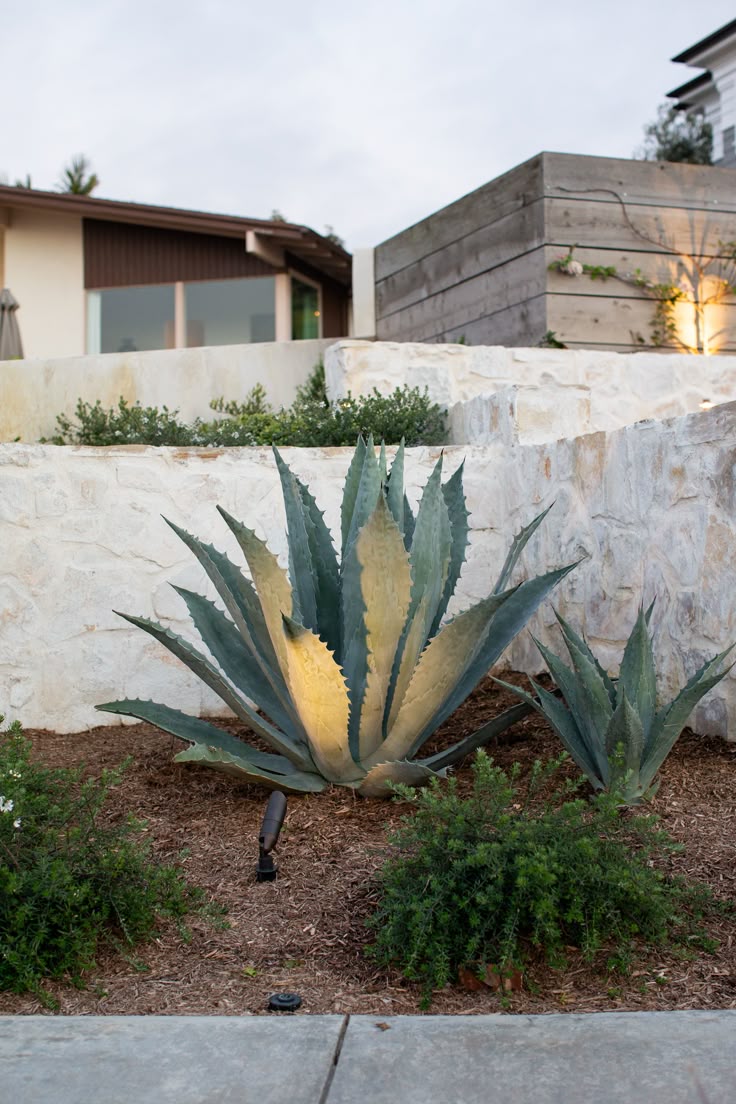
Agave Americana
6 OMR
8 OMR
Save 25%
Product added to cart
—
show cart
Fast, Free Shipping
Quality Guaranteed
Secure Payment
product description
The American agave (scientific name: Agave americana), also known as the horn plant or agave, is a perennial succulent renowned for its remarkable ability to withstand drought and harsh climatic conditions.
General Characteristics
Form: It grows in a large, symmetrical rosette of leaves, with individual plants reaching up to 1.5 meters in diameter.
Leaves: Long, thick, fleshy leaves, typically blue-gray or bluish-green in color, ending in sharp tips and bearing small lateral spines.
Flowering: It is called the "horn plant" due to a common myth that it blooms once every hundred years. However, it actually flowers only once at the end of its life (after 20 to 30 years), producing a very long flower stalk, after which the plant dies.
Habitat and Environment
Native habitat: Southwestern United States (Texas, Arizona) and Mexico.
Distribution: Now cultivated worldwide as an ornamental plant, especially in arid regions such as the Mediterranean basin, the Arabian Peninsula, and parts of Africa and Asia.
Care Instructions
Light: Prefers strong, direct sunlight but tolerates partial shade in very hot areas to prevent leaf scorch.
Watering: Requires very little watering; allow the soil to dry out completely between waterings. Watering needs increase in summer and decrease in winter.
Soil: Grows best in well-drained, sandy soil that does not retain water.
Propagation: Easily propagated by offshoots or suckers that grow around the base of the parent plant.
Uses
Ornamental: Widely used in desert landscaping (xeriscaping) for its aesthetic value and low maintenance costs.
Industry and Medicine: Its fibers are used in rope and textile manufacturing, and some substances extracted from it are used in traditional medicine.
Would you like to learn how to grow American aloe vera in pots at home or how to get rid of pests that may affect it?
Fast, Free Shipping
Free delivery on orders 15 OMR or more. Orders under 15 OMR have a flat 3 OMR shipping fee.
Quality Guaranteed
Your products will arrive in excellent condition—guaranteed.
Secure Payment
All payment transactions are encrypted and secure.